Category: Trail Blog

Once I arrive in Portugal, I hope to provide daily progress of my journey to Santiago de Compostela.

  • Bath to Lynmouth

    Bath to Lynmouth

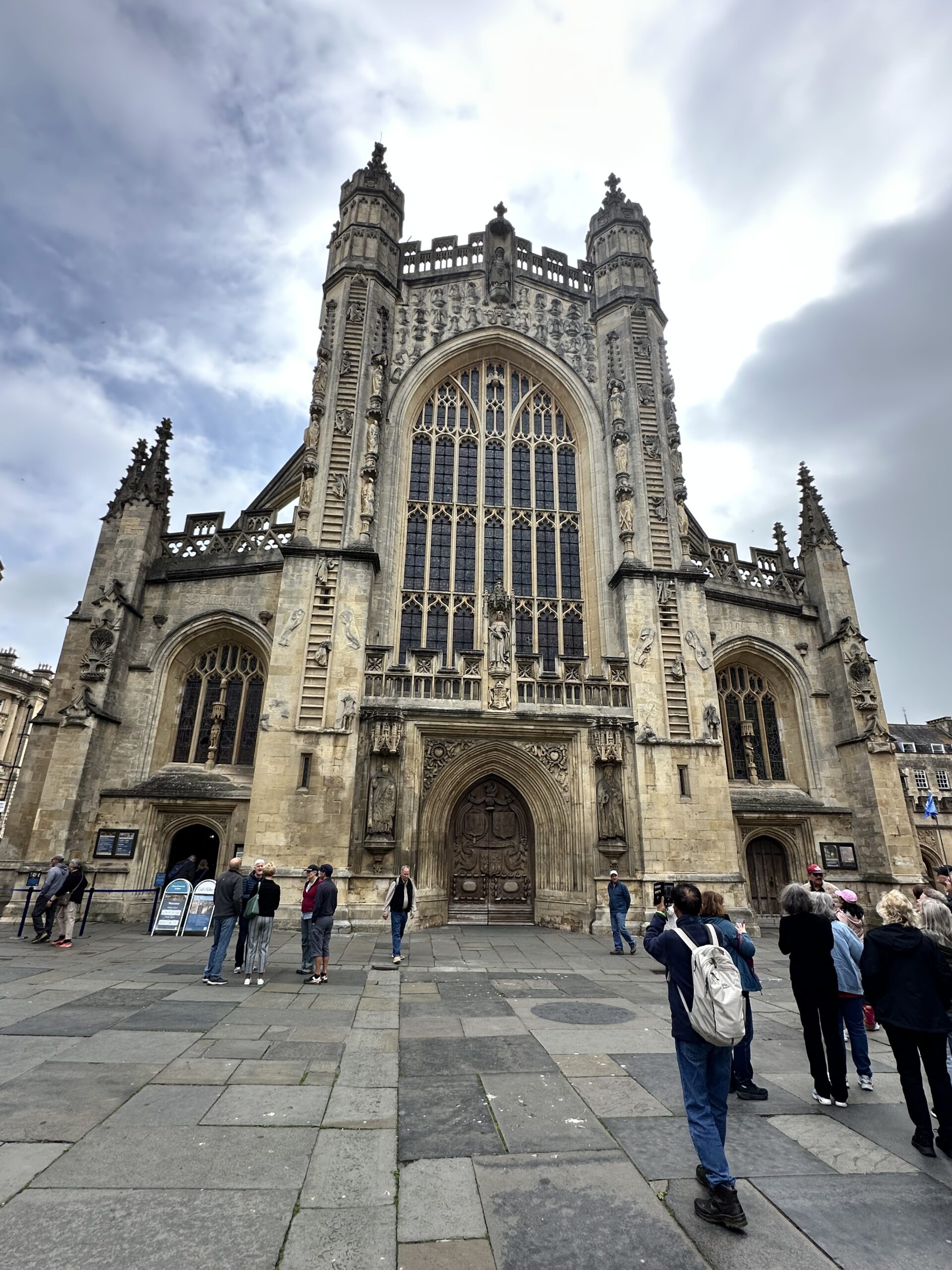
    Thursday, May 21 – We said goodbye to our little shepherds hut and packed our car. Time to leave the Cotswolds and head to the coast. But first, we wanted to do a quick tour of Bath, a city immersed in history thanks in no small part to its mineral hot springs and their restorative powers,

    The ancient Brits settled here after legend has it that the son of one of their kings was cured of leopresy from soaking in mud from one of the springs. When the Romans invading England, they established a city here in the first century AD.

    We went on a 90 minute walking tour with a very entertaining local guide. We did not go into the Baths, as that part of the tour was an extra 27 pounds ($36) each for a 30 minute tour. Although much grander, we had seen Roman bath houses just a few days ago. Besides, we had a 3-hour road trip to get to our next destination.

    I want to take a moment to commend Pam for her driving. Before we left home, she offered to drive, as this was her fourth trip to Engand and – as she said – being lefthanded makes her naturally want to drive on that side of the road.

    While we have driven on a few freeways (refered to as motorways and designed with an “M”). Most of our time has been on much smaller roads. The equivalent to state highways back home are designated with an “A”, like A234. These typically (but not always) are two lanes with a painted white center divider. Smaller country roads have a “B” designation and often lack center lines and can be a tight squeeze when there is oncoming traffic.

    And then their are the “lanes,” single-lane country roads with tall hedgerows or trees on both sides. The roads are pot-holed and you need to remember when the last “turnout” was so that if you do encounter another car, you know how far you may need to back up to make way. While at the Shepards hut, we needed to go down about three miles of lanes to get to our place. And the route for us to get from Bath to Lynmouth included a 7+ mile stretch of lanes. To say these roads are narrrow is being generous. Once, we had to back up into a turn-out to let a horse pass.

    We had chosen a route that looked like it would take us along the coastline of Bristol Bay so that we could enjoy the view. Sadly, the hedgerows kept us from seeing any sign of the sea until we were just a couple miles from our destination. We were on a high ledge hundreds of feet above the water and then a sudden, steep downhill stretch dropped us into the quaint village of Lynmouth – so named because the river Lyn empited into the bay here.

    We checked into the 7-room Bonnicott Hotel, perched on rock a ledge with a view of the sea and the sound of the rapids of the Lyn as our lulaby. After settling in, we decided to go explore and stretch our legs.

    Between us and the sea is a small park along the waters edge. We walked down the driveway of the park and met two men in safety vests who told us there was a motorcylce gathering taking place in the park. They explained that they were “Blood Bikers,” an organization of volunteer riders who transport blood and other urgent medical supplies free of charge for the NHS during non-business hours – nights, weekends & holidays, 365 days a year. They invited us to join their festivities, but we decided to take their recommendation for the best Fish & Chips place instead.

    The Espanade offered a choice of fried fish. Pam & I both got Cod and split an order of chips. We ate on a bench along the seawall, while baby Jackdaws squawcked for crumbs. After dinner, we walked down the rocky beach to the shore.

    Lynmouth has a small harbor and when tide is out, the boats lay high and dry. We had walked by them at 7:45 and all the boats were grounded. Just an hour later, as we walked back, the tide had come in enough that all were floating again.

    Our walk back to the hotel took us past a pub with a guitarist leading the crowd in sea ballads. We vowed to come back tomorrow night and join them.

  • A detour to Wales

    A detour to Wales

    Wednesday, May 20 – When I woke up this morning, my Google feed had a story about a forest in Gloucester being voted as one of the most beautiful places on earth. When we looked at a map, it was only about an hour from where we were staying. We decided to make an afternoon trip of it.

    After Pam cooked us a delicious omelette breakfast, we decided to explore the area around our shepherds hut. A public footpath cut through the paddock immediately outside our door. A woman was exercising her 34 year old horse, Rebel, and we chatted with her for a bit. The next pasture had been mowed down the middle for the benefit of walkers. Not so with the next one, through which we had to walk through wet, knee-high grass, blackberries and nettles. By the time we reached the next field of high wheat, we decided it was time to abandon the footpaths and try walking the narrow country lanes. We walked up to the next village of Upper Cheney, then reversed course to finish a three-mile loop.

    We got back to the hut, changed into dry clothes and headed for the Forest of Dean. To reach it, we had to drive across the River Severn, which landed us in Wales. We then turned northeast, crossed the River Wye and were back in England. We parked at a viewpoint for the Symonds Yat Rock, site of an acient hill fort. We took some photos of from the Rock and then took a steep trail down to the river below.

    At rivers edge, there were several inns and we stopped at one for a drink. There was a “hand ferry” for crossing the river. We didn’t know what that meant, so we sat down and watched six hikers go across. They boarded and a ferryman launched the long, narrow craft which was attached to an overhead line by a rope with a loop. The ferryman would pull the boat toward the line, then flop the loop forward, slowing making the way across the river.

    After the ferry show, we headed down a trail along the river following a retired railway line. After about a mile, we came to a suspension footbridge. We crossed over the bridge, had a picnic snack on the Wales side and then headed back.

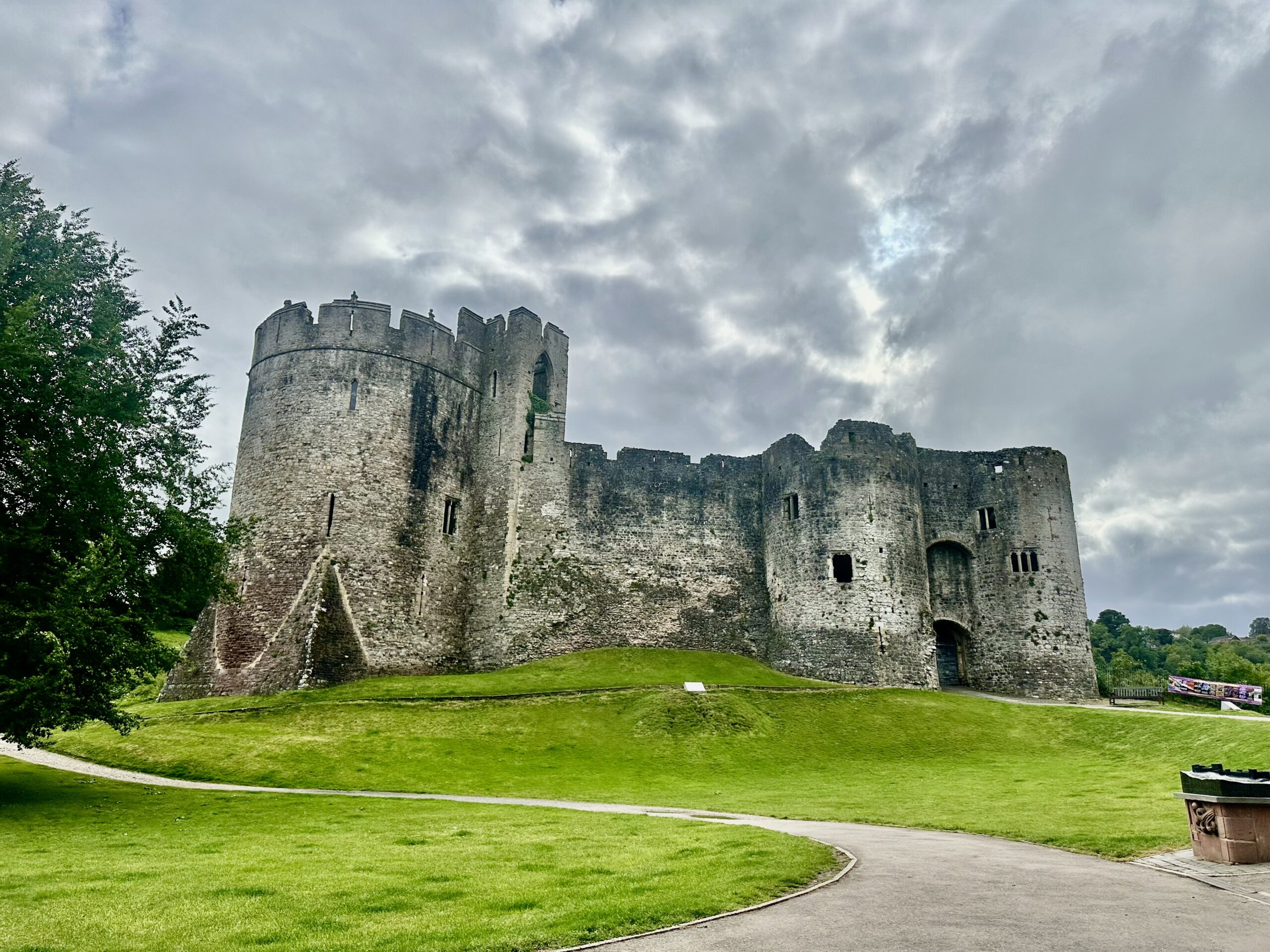
    When we got back to the car, we realized that if we were to drive straight back, we would get stuck in rush hour traffic around Bristol. So to kill time, we decided to have dinner in Chepstow, a town on the Welsh side of the River Severn. I randomly picked an eating place so that GPS would guide us into town. As we left the highway and descended into the old town, Pam exclaimed “there’s a Castle!” Sure enough, we had stumbled into the Chepstow Castle, which was first built in 1087 by one of WIlliam the Conqueror’s lieutenants.

    We walked around the exterior of the massive castle, which had closed for the evening, and then had dinner at the George Hotel (established in 1620).

  • Dyrham Park

    Dyrham Park

    Tuesday, May 19 – We ate breakfast at Windylands and met two men walking the Cotswolds who had also stayed the night. Greg & Paul were from Northern England and told us that the weather they had experienced was much cooler than normal. So far, he haven’t had any regrets about driving versus the original plan of walking.

    Following breakfast, we drove into the town of Old Sodbury and found a roadside laundromat. It was literally in the parking lot of a Texaco station. We filled one of the two machines and drove off to find a short walk while our clothes washed – the machine promising to send us a text five minutes before the cycle completed. We found a large commons and enjoyed walking through a dog park until it was time to return. Transferring our clothes to the dryer, we decided to just stay on site for the 30 minutes it took.

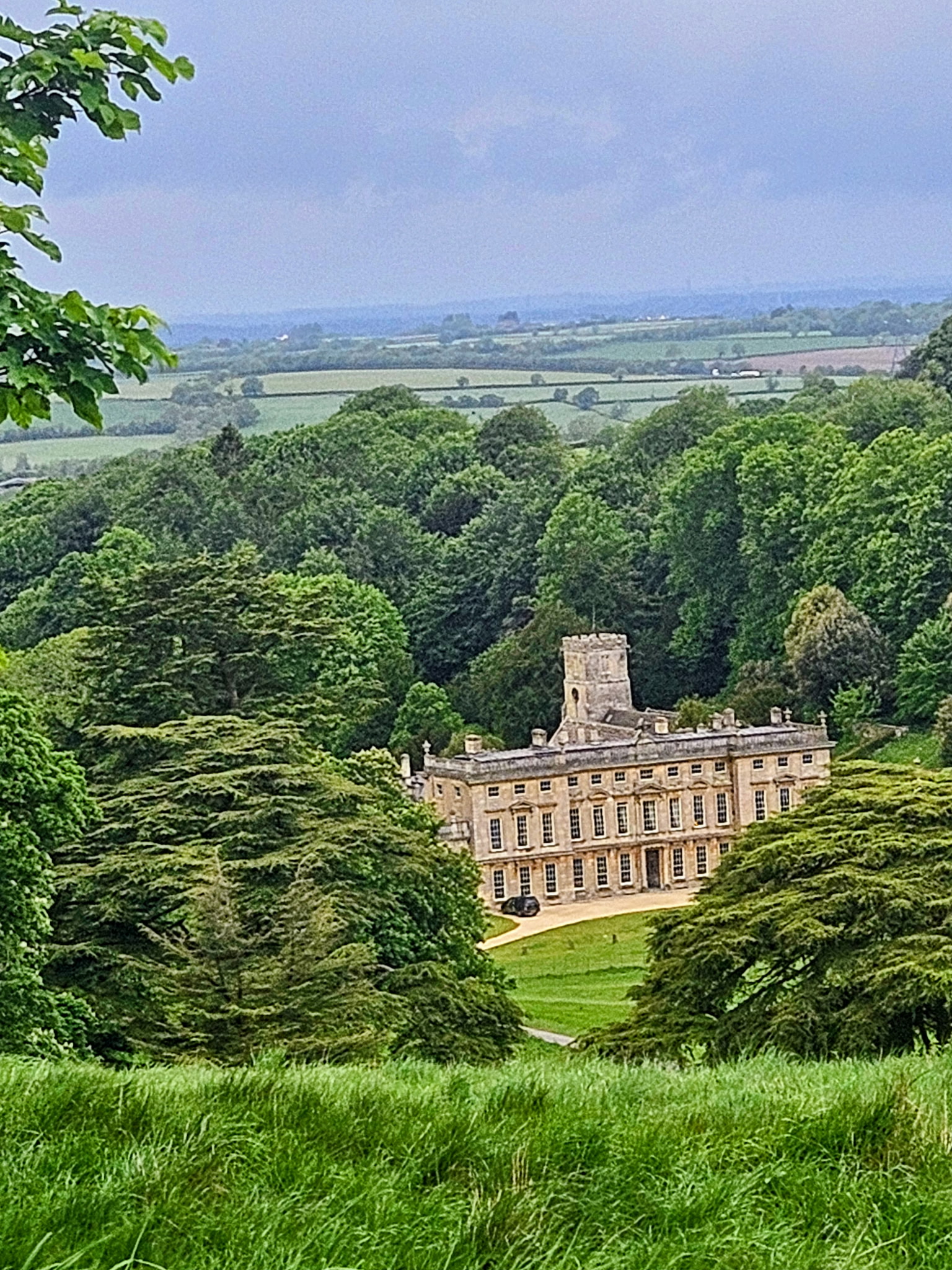
    Our next stop was Dyrham Park, a late 17th Century estate featuring a mansion and 270 acres of grounds managed by the National Trust. The mansion was constructed by William Blathwayt, who served as both Minister of Finance and Secretary of State during the reign of William and Mary. He inherited the estate, but the previous mansion had fallen into disrepair, so he hired the most famous architect and landscape architect of the era to design the structure and accompanying grounds.

    Today, it is open to the public and a herd of nearly 50 Farrow Deer live within the estate. The name, Dyrham, comes from Old English and the original estate owners had been granted a royal charter to build a fence and enclose the estate for exclusive hunting rights to the game within.

    We spent about three hours on site, mostly walking the grounds and formal gardens, In that time the sky looked threatening, but as has been our luck so far, the rain held off until literally the minute we got back to the car.

    For the next two nights, we are staying in a Shepherd’s hut in the tiny village of Beach. If you’ve not heard of a shepherds hut before, visualize taking a tiny house and then making it smaller. It’s probably 8’ x 15’ in total size, but incredibly efficient in layout. We have a full bath, kitchenette, double bed and small table and chairs.

  • Castle Combe

    Castle Combe

    Monday, May 18 – Our day started with a marvelous breakfast buffet at the Tortworth Court. We then packed the car and took a walk around the manor grounds and discovered another arboretum just beyond the manor grounds.

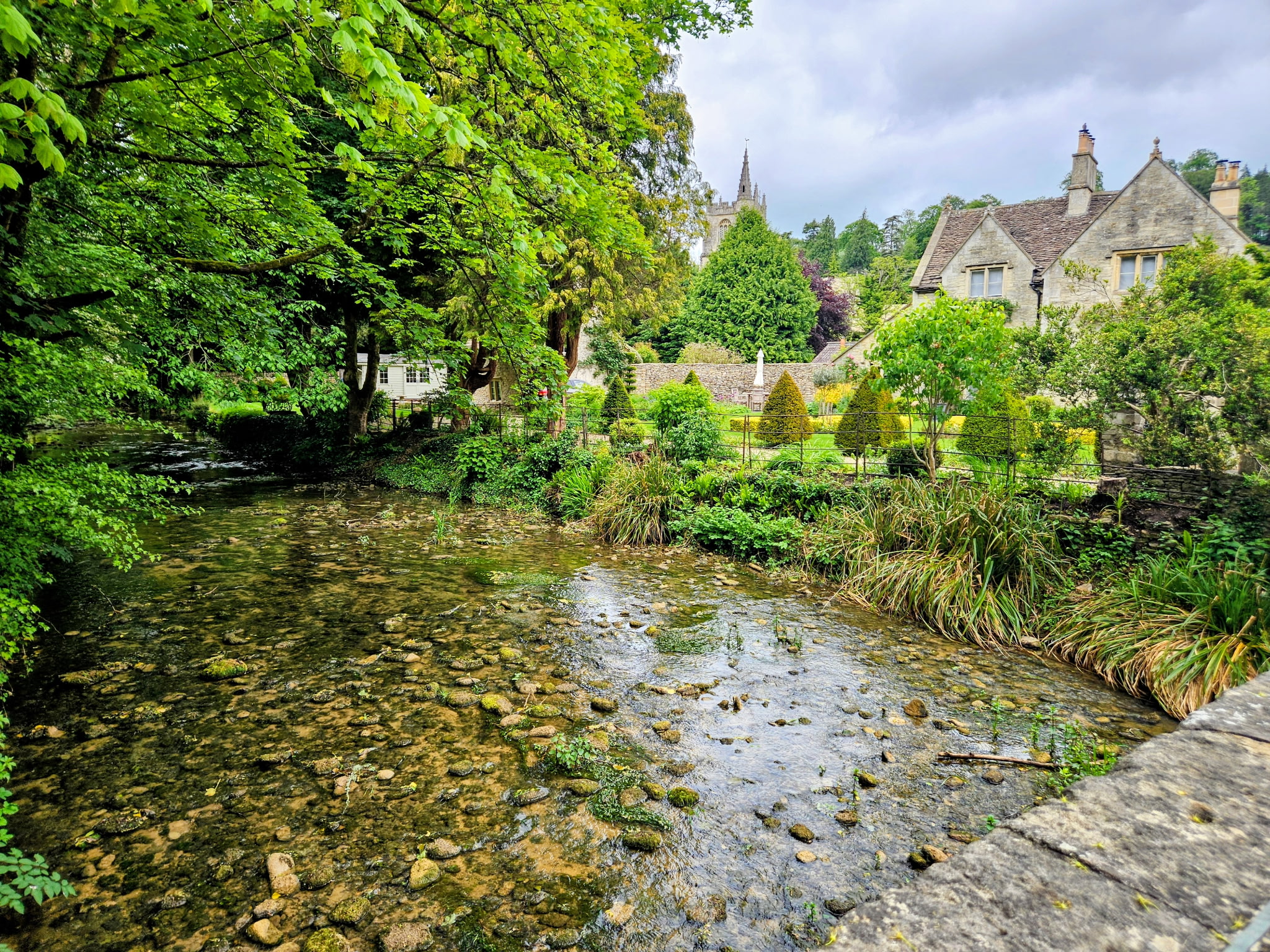
    Our next stop was Castle Combe, considered by many to be the most charming village in the Cotswolds. There is no castle in Castle Combe – with was destroyed centuries ago – but the village remains. While it was cute, it is visited by droves of tourists and that cuts into the charm for me.

    We found a five-mile loop hike starting in the town center and followed a slow-moving stream out of town. We crossed over an old Roman bridge and went through a “kissing gate” – so called, because there is cozy room for two inside the swinging mechanism.

    Once through the gate, we walked along the edge of a wooded hillside where a herd of a hundred or more goats were busy taking care of the underbrush. Many kids had recently been born and there was all kinds of fun being had by crowds of little goats chasing each other and butting heads (and other body parts).

    At the far end of the loop, we passed by a hamlet of just a few houses and worked our way up a hill where we entered another pasture; this time filled with sheep.

    We climbed a steep rise and found a bench with a beautiful view of the small valley we had just left. After a brief rest, we headed back to town through a forest that had just been heavily logged. We found a sign indicating that a disease had attacked most of the trees and they were being cleared to prevent spread.

    We arrived back in town for a late lunch (thankfully after the tourist busses had departed) in the ancient White Hart Inn.

    Our lodgings tonight are at the Windylands, a private residence with a handful guest rooms outside of Old Sodbury.