Category: Trail Blog

Once I arrive in Portugal, I hope to provide daily progress of my journey to Santiago de Compostela.

  • Fossils, Castles & Trains

    Fossils, Castles & Trains

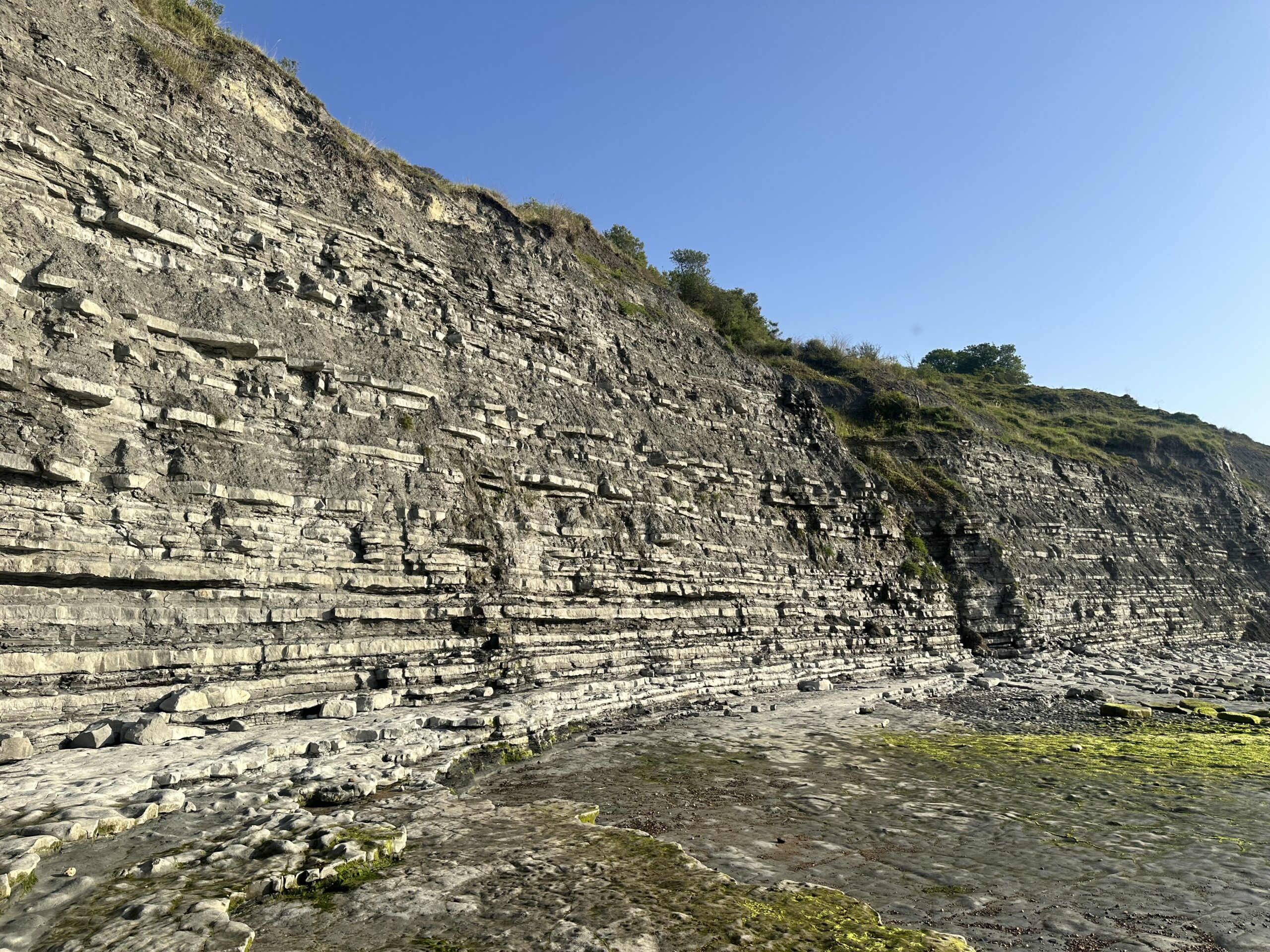
    Monday, May 25 – We got up early to beat the crowds and the heat to the cliffs beyond the beach in Lyme Regis. Low tide was at 8:25 am and the best time to seek fossils is the two hours before and after. The cliffs along the Jurassic Coast are said to be the best place on earth to fossil hunt. And everyone is welcom to come down and give it a shot – just don’t dig into the cliffs itself. Each storm chips away the shale and sandstone revealing relics of the past. That includes both 150 million year old fossils, and junk thrown over the banks from the past centuries of human habitation.

    Pan really wanted to find an ammonite nodule – the snail-like creatures that are the , but we only found imprints of them.  She did find vertibrae and some other fossils.  Lots of metal objects, colored glass rounded by the sea.  We even find bits of pottery and porcelain. 

    We made our way back to the car, stopping by the statue of Mary Anning.  Then, back to the car for a 90 minute drive to Isle of Purbeck further east up the coast . 

    The catalyst for our roadtrip was to see the ruins of Corfe Castle. Originally constructed starting in 1086 by William the Conquerer, the Castle was a royal holding until being sold in 1572, Sir John Bankes purchased the Castle and surrounding lands in 1635 and it stayed in the Bankes family until donated to the National Trust in the 1990’s. During the English Civil War in the 1660’s the Castle was one of the only Royalist strongholds in Southern England and it withstood two seiges by Parlimentarian forces. It fell only due to deciept in a Trojan Horse-style infiltration of the castle. Once Parliment took control of the government, the Castle was ordered to be destroyed as punishment to Bankes for his royalist leanings.

    Our visit coincided with a May Fair on the castle grounds and the combination of that and the Bank Holiday and sunny weather made for a very crowded visit.

    We walked back into the village and bought tickets for the steam engine train that runs between the Castle and the town of Swanage on the coast. Once in Swanage, we headed directly to the shore to cool our feet.

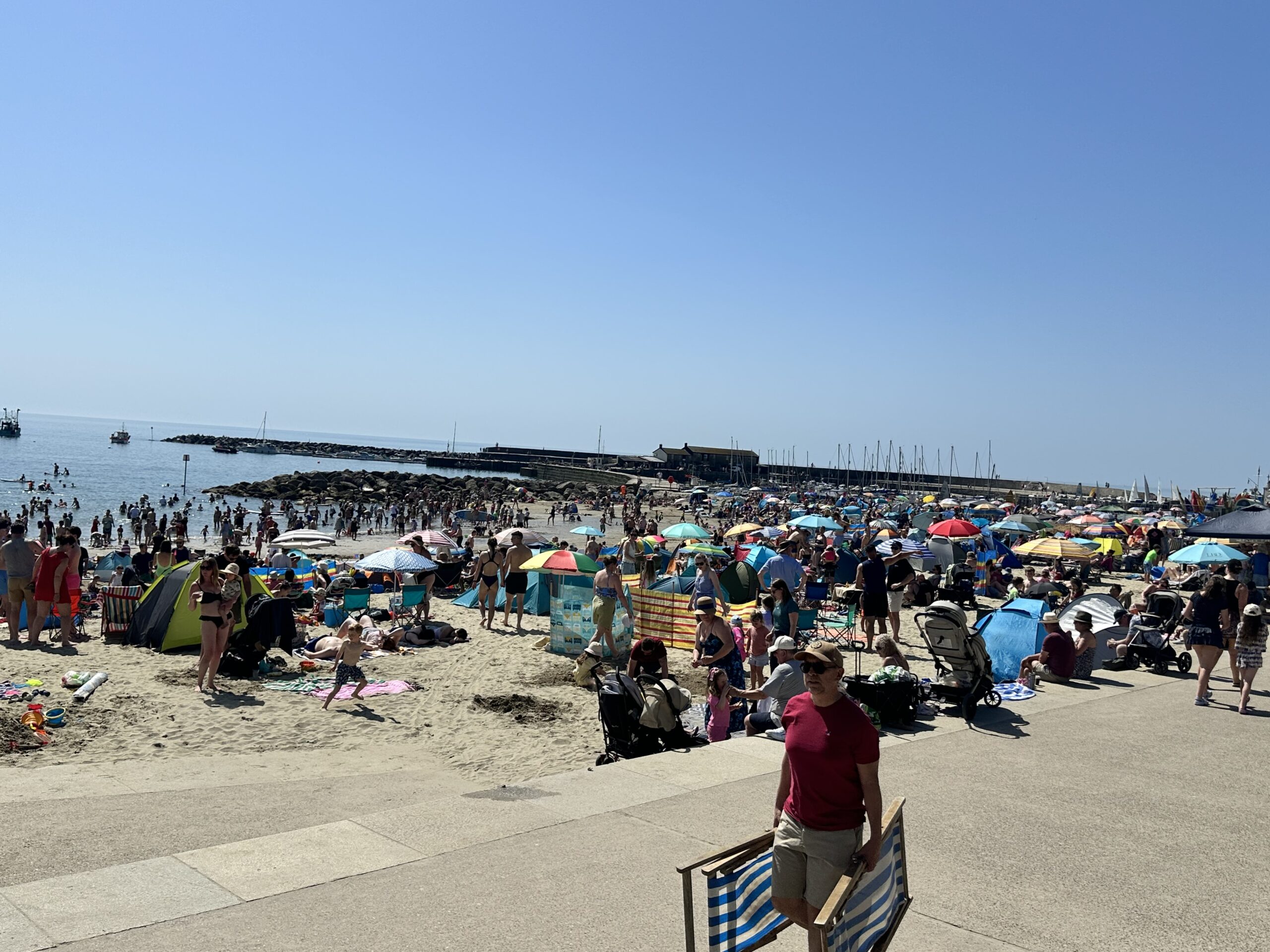
    The beach was packed as folks from all of the country flocked to enjoy the sun and the water as a respite for the record-breaking heat. Monday was the hottest day in May EVER recorded in the UK and the next day is expected to break it again. We wandered the prominade for about and hour. Swanage reminded me of Seaside, Oregon, except. that the arcade and restaraunts parallel the beach on the inland side of the promenade.

    By about 3 pm, we had had enough of the heat and crowds and took the train back to our car. We were grateful to get back to our stone cottage that had remained fairly cool.

  • She sells seashells

    She sells seashells

    Sunday, May 24 – That famous tounge twister derived from a song released in 1908, but its origin story goes back almost another century. In the little town of Lyme Regis, a young girl named Mary Anning helped support her widowed mother by selling shells and fossils collected along the lime cliffs of Devon outside of town.

    She found the first recorded full skeleton of an icthyrosaurus, a prehistoric sea creature believed to be an ancestor of a croccolide. The fossil was nearly 10 feet long. Mary went on to become a famous paleontologist and it all started because of the fossil-rich cliffsides just outside of town.

    While Mary likely had the shores pretty much to herself in 1812, coming into Lyme Regis on the Sunday of a holiday weekend with record high temperatures.forecast meant for more crowded considitions. Our cottage is in Uplyme, a village up the hill from the coastal community and we took a leasurely 2-mile stroll along a river path to enter town before 10 am. The place was already bustling.

    We walked along the Prominade, lined with pastel-painted sheds which people rent for the season and store their beach furniture and – on days like today – hide from the sun. We walked past the pebble beach and out onto the Cobb – the city Jetty that was featured in a scene with Meryl Streep from The French Lieutenant‘s Woman. Walking back to the beach, the sun was already blistering by 11 am, so we stopped in a local pub for a cool drink.

    By the time we emerged, it felt like the crowd size had doubled. We headed up into town and stopped at the local Fossil Musuem. It had a wonderful paleontogy selection featuing the creatures found along the shores. It also had one floor dedicated to the town’s history. We learned that it was once a haven from a smuggling trade avoiding paying the King’s tarrifs. In 1644, during the English civil war, the town was friendly to the Parlimentarians and held off siege by Royalists for eight weeks. One hundred and twenty locals were killed, but the Royalists lost over 2,000 troops in their failed attempt to capture the city.

    The area has been a popular vacation site since the mid 18th century and has seen many notable authors summer here. Among them: JRR Tolken, Alfred Lord Tennison, Jane Austin, John Gould, Beatrix Potter and Tracy Chevalier.

    By noon, we were done with the heat and the throngs and ready to walk back to our cottage. About a quarter mile from our destination, we came to a cricket pitch that had been vacant earlier in the day. This time, the two sides were just breaking for tea.

    We spent the rest of the afternoon staying in our cottage out of the sun. As the evening came, we went for a walk in the countryside near our cottage and decided to hunt for some Geocaches. There were two within a mile of our place. We found then both with only a few stings from nettles in some overgrown areas.

  • Wild goats & horses (oh my!)

    After a breakfast of salmon and scrambled eggs, we said good bye to the Bonnicott Hotel and hit the road. Our destination tonight is on the opposite coast of Southwest England in the resort town of Lyme Regis. But on the way, we had a few stops to make.

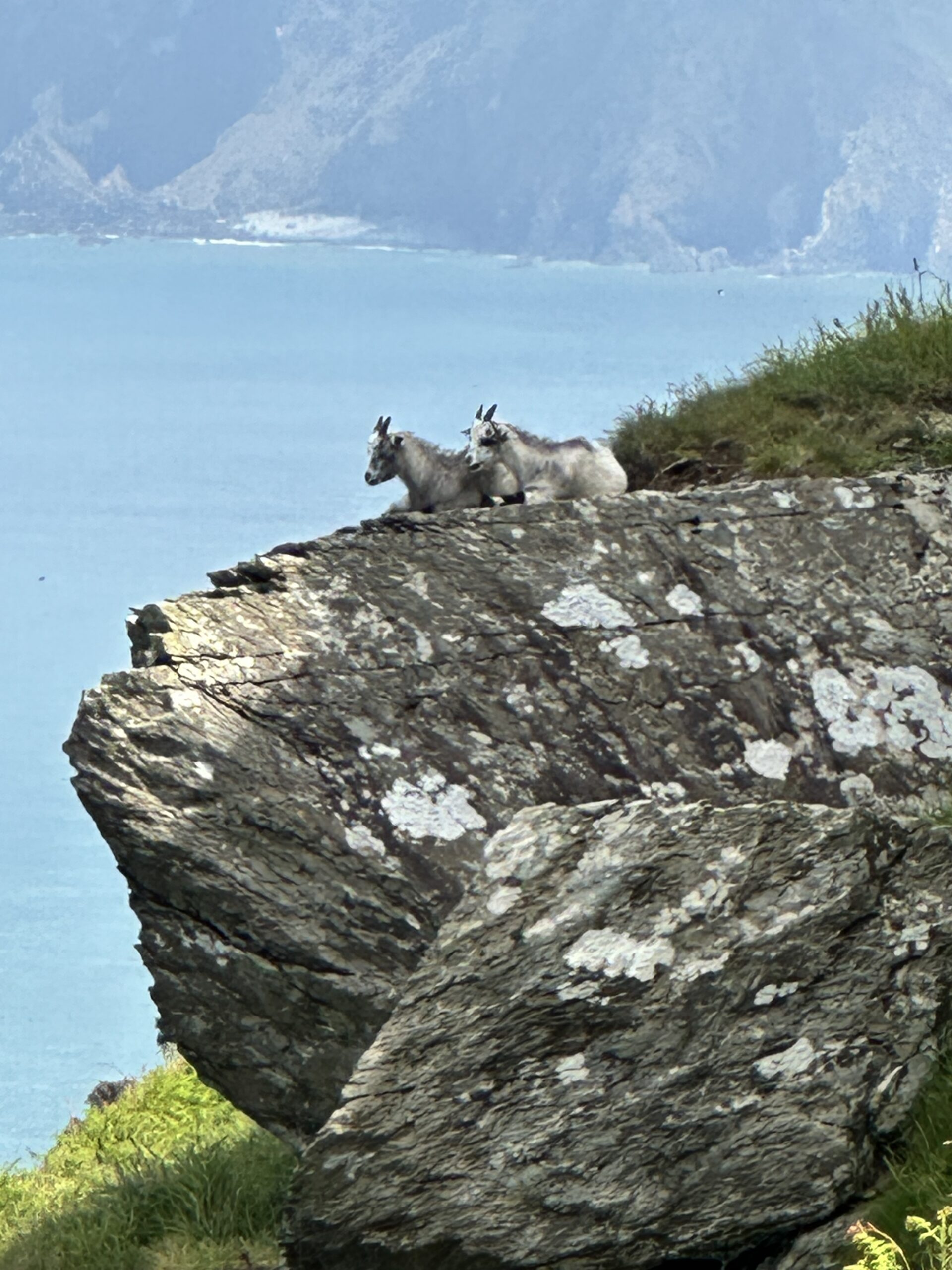
    First, Pam wanted to revisit the Valley of the Rocks to get more photos of the wild goats. The battery on her good camera had died during our walk yesterday and she wanted to get some better photos of the goats. The results are below.

    Our path to the Jurassic Coast took us through Exmoor National Park. This rugged landscape is home to a herd of feral horses and Pam hoped to see some. We programmed out navigation to go to a preservation center and headed north.

    Along our route, we passed by some incredible scenary, and we pulled over to take photos. When we got out of the car, we noticed hoofprints in the dried mud. And sure enough, a couple of horses were grazing nearby. Although feral, the horses seemed quite tolerant of humans. We were able to walk within about 20 feet of them.

    We snapped some shots and drove on down the road another mile. All of a sudden, Pam spotted a small herd on the other side of the road. We found a pullout and walked amidst the group of about 18 horses.

    Next stop was the village of Beer on the Jurrasic Coast. It was recommended to us by Pam’s former Orcas Island neighbor, Howard, so we decided to make it our lunch stop.

    At this point I should throw in a quick sidenote: while it’s Memorial Day in the US, the UK is celebrating their Spring Bank Day, marking the beginning of their summer season. on top of being a three-day weekend, there is a heat wave forecast for the UK, so the coast is a bit crowded. I mention this because Beer was teeming with people. We found a pub that Howard recommended and had a late lunch.

    Our final stop before heading to our accomodation was a local supermarket to stock up. Our next three days are in an Airbnb with a kitchen, so we’ll have our breakfasts in.

    We finally arrived at our cottage around 5 pm. We are staying on a farm that has built three vacation units into their buildings. We’re staying in what they call the “garden cottage.” We have a private patio with a koi pond and a very cozy place to base our adventures from.

  • A Day in Devon

    A Day in Devon

    With two nights booked at our hotel in Lynmouth, we decided to spend the day walking the surrounding area. We started off with a breakfast in the hotel.

    The Bonnicott Hotel, along with its attached restaurant, The Bay View are owned by two enterprising women, Catheryn and Sarah. In addition to the property we’re staying at, the also own a seafood restaurant down the street, a gift shop next door and have 120 lobster traps. While they have staff to help with the other enterprises, they do it all by themselves for the hotel and the Bay View.

    We had to pre-order our breakfast the night before and when we came down, one of the seven tables in the dining room had our room number on it, with our juices and jams. A French press with our coffee soon followed, along with toast and our requested breakfast entrees. At breakfast, we made reservations and placed our dinner orders – which is the only way the Bay View operates.

    Following breakfast, we took a hike up along the East Lyn River. About two miles up, we came to Watersmeet, where a tea house sits in the middle of an otherwise remote river canyon. The teahouse was originally built in 1832 as a fishing retreat, but has been a teahouse for the past century.

    We made our way back to the hotel and changed into some cooler clothes, as our afternoon hike was going to be in a more exposed area. We then walked to the other end of Lynmouth and caught the Cliff Railway to Lynmouth’s sibling town of Lynton – sitting on the bluff above.

    The Cliff Railway is one of four water-powered railways in the world, and bills itself as the longest and steepest. It consists of two cars and a pulley system. Each car has a water tank located under the carriage. When a car is on top, the tank is filled with water, while the car at the opposite end empties its tank. Each brakeman signals the other when the water is filled/emptied and passengers are aboard. Then the weight of the top car pulls the bottom car up a 60-degree slope gaining 500 feet of elevation in just two minutes. The railway has been in use continuously since the 1890’s.

    From the upper town, we headed out on a walk along the high bluffs to an area called the Valley of Rocks. We walked along a steep hillside and enjoyed watching a herd of wild goats as they grazed.

    We had dinner in the hotel dining room – one of two guest tables this night. Pam had lobster rolls, with fresh catch from the morning. I had salmon on yakisoba noodles. We shared a heated brownie with ice cream for dessert. After our meal, we walked down the hill to a local pub that had advertised live music tonight. We enjoyed the solo female singer who had karioke-style musical back-up. She had the crowd up dancing and singing along. All but an local dog who befriended us and curled up on the bench next to

    Pub Dog