Author: Greg H

  • Pack and other carriers

    Pack and other carriers

    Backpack – Next to your footwear, your pack is likely the next most important item on your packing list.  It needs to be large enough to hold your stuff – but small enough to keep you from bringing too much.  I strongly recommend purchasing your pack from a reputable outdoor store that can help with both the selection and fitting of your pack.

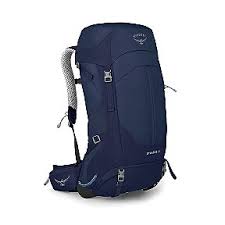
    Osprey Stratos 34

    For this trip, I chose an Osprey Stratos 34 Liter back.  It came with a built-in rain cover.  The pack has an arched frame that has a mesh that sits against your back and space for air to flow.  The hip belt has zippered pockets on each side for easy access items.  The main compartment is accessed from a zipper on top.  There are two smaller pockets on top with mesh liners for valuables and other quick-access items.  Besides the bottom pocket where the rain cover lives, below the main compartment is another zippered area originally intended for carrying a sleeping bag.  I’ll be using this chamber for my sandals – so they don’t get other items dirty – and my rain jacket – so I can access it in a shower without getting any of my other gear wet. 

    Besides all the zippered pockets (8 total), there are oversized pouches on both sides for water bottles and straps for attaching things to the outside of the pack. With all this. The pack is still small enough to be a carry-on piece of luggage for my flights!  (1500 grams/3.3 pounds)

    Fanny pack – While the bulk of my gear will be in the Osprey, every Camino hiker should have a fanny pack to act as an over-sized wallet.  Most wear these not across your back, but in front for easy access to money, passport, snacks, phone, sunscreen, etc.  Mine is an REI Co-op Trail 2 Waist Pack. While any little fanny pack will probably do, what I liked about this one was the abundance of pockets.  There is a narrow front pocket, a large main pocket and inside the main pocket are two zippered “slip pockets” where valuables can hang out.  The overall size is 2 liters, which should provide enough room to toss in some fruit or other snacks for the trail.  While you can drop your backpack and leave it with confidence most places, you NEVER let you fanny pack out of your sight.  (113 grams)

    Day pack – another pack you ask?  Why yes.  But this one is tiny and serves a couple of purposes.  It folds up on itself and when folded is about the size of a chicken egg.  It weighs less than 4 ounces (110 grams).  The two primary purposes are as a grocery carrier and a laundry bag.  But if you are having a rest day, but still want to see the sights of the city, it also makes a great day pack.  I bought mine a couple years ago for a trip to SE Asia.  It’s the 16 liter version of 4Monster Hiking Daypack.  (110 grams)

    Dry bags – with most items being stored in one giant pocket of your pack, a system to keeps things organized will save you time and a lot of hassle.  Using dry bags not only keep like items together, but also have compression features to squeeze things down and provide some degree of protection should you encounter heavy rain.  I purchased a 5-piece set from Frelaxy.  The bags are color-coded and each a different size (3, 5, 10, 15 and 20 liter).  While I haven’t finalized my packing plans yet, I have my outer clothing in the 15L and my daily wear in the 10L at this point.  I don’t see me taking the biggest bag, but will likely use the 3 and 5L for Electronics and Miscellaneous.  (181 grams – total for 4 bags)

    My 10L dry bag is my daily clothing. Compressed down to about 3L.
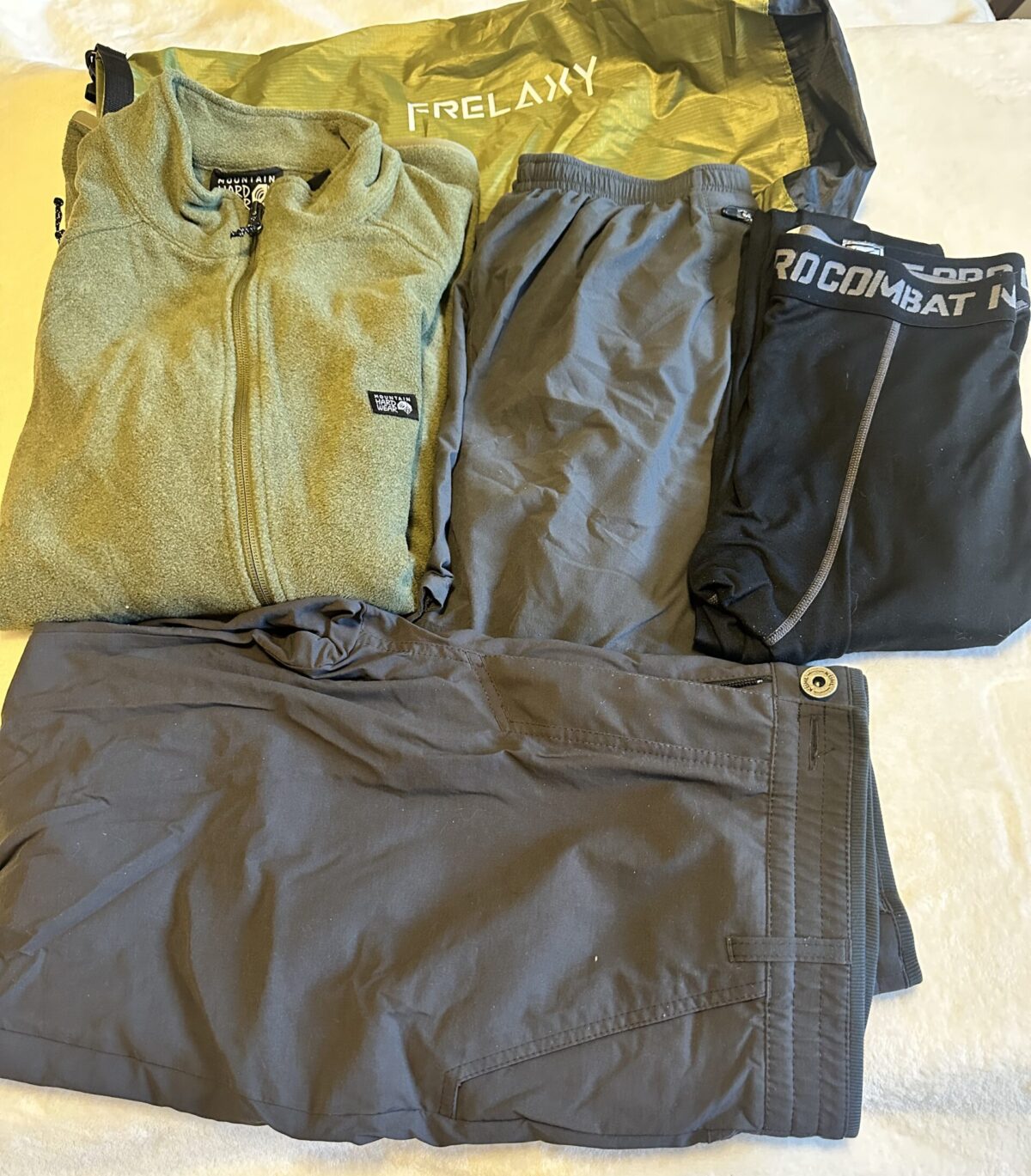
    15L bag with my “extra” clothing: Fleece, long pants, running shorts and compression leggings.

    Toiletry bag – I have a Travelon Compact Hanging Toiletry Kit that I bought on Amazon.  It folds up to about 9″x5″ and has two zippered mesh pockets and three mesh elastic pouches for small bottles.  It has a fairly large plastic hook so if you don’t have counter space, you can hang it on a towel hook. (91 grams)

    Carabiners – I have a couple of loose super lightweight carabiners that I intend to bring in case I need to hang things from the outside of my pack. (15 grams total)
  • July 13 Simulation Hike

    July 13 Simulation Hike

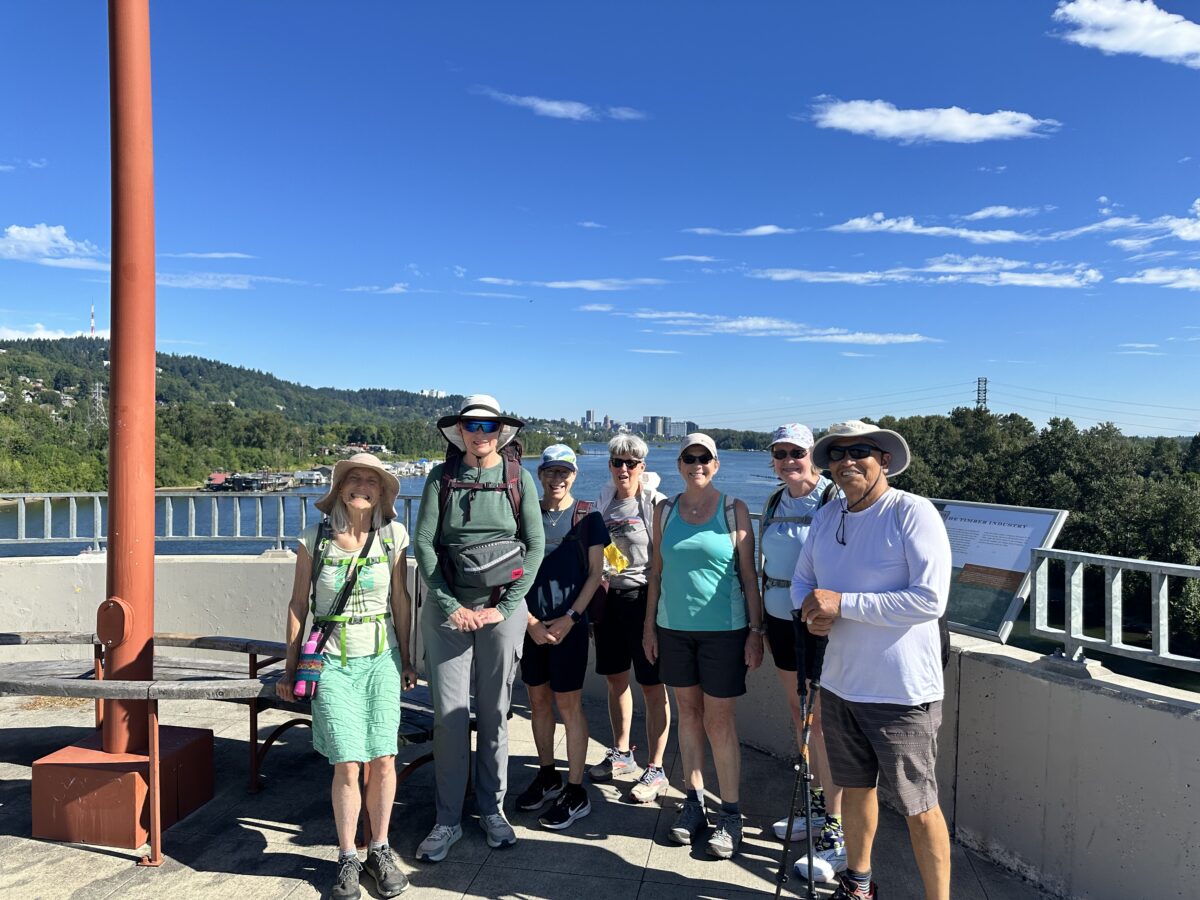
    I hosted my second Camino Simulation hike on Sunday. This time, I had seven others join me. Despite the fact that the forecast called for high temperatures in the mid-nineties, everyone stuck it out until the end.

    This time the group consisted of an interesting mix of Camino experiences. Barbara & Richard are preparing for their third Camino and will be starting in La Puy, France and 500 miles to the traditional starting point in St. Jean. Diane had just returned from her Camino, but wanted to try out some new toe socks to see if they would alleviate the blisters she encountered on the trail. Still others in the group had yet to plan a Camino, but just wanted to see if they could hike 15 miles.

    Fortunately, we had shade for most of our walk. We took two extended breaks to hydrate and eat. The first in a coffee shop in Sellwood and the second in Hamilton Park along the Terwilliger Parkway. Altogether, we completed the 14.7 miles in less than six hours, included 4 hours and 40 minutes of actual moving time. That worked out to a pace of 3.1 miles per hour.

    My Camino Simulation crew crossing over the Sellwood Bridge.
  • Camino Simulation – June 29

    Camino Simulation – June 29

    I needed to start working in some longer hikes that were roughly the same length as what I’ll need to average on the Camino. Since my pilgrimage will be through towns and villages, I decided that an in-city hike would best replicate a day-in-the-life on the Camino. Researching existing routes on the AllTrails app, I found a bike route that I have modified to include some off paved road sections and to incorporate the breaks I would likely include on the Camino.

    After two trial runs, I have now posted this as a MeetUp hike through the hiking group I belong to. I’ve cross-posted it to a local Facebook group of the Portlandia Chapter of the Camino Association of America.

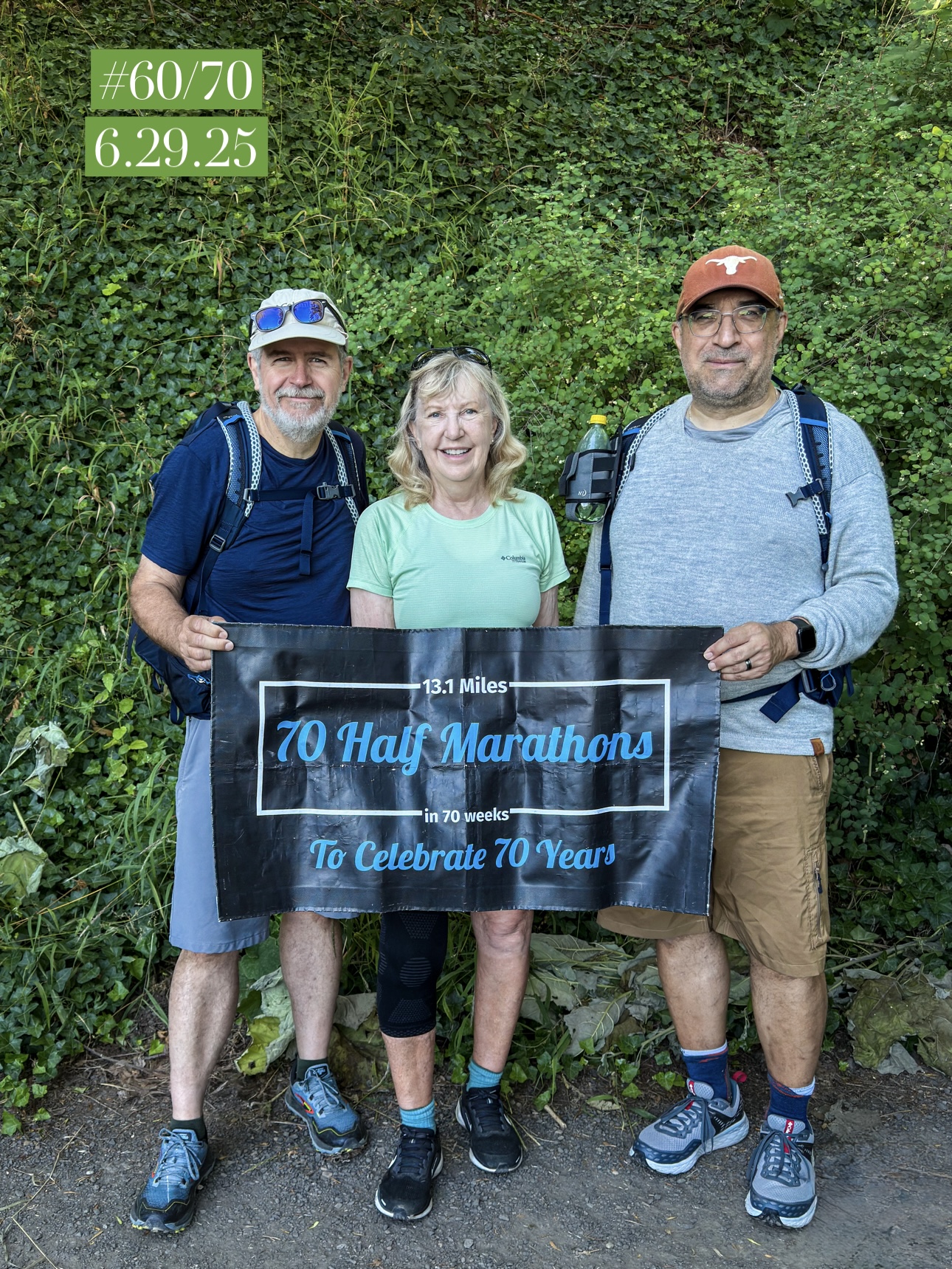
    My first group hike only had two participants, but we had a lovely time. Like me, Carlos was preparing for his first Camino. He was going to start in Porto and would be hiking with his 77 year old mother. Robin, was the Camino veteran of the group. She was preparing for her fifth and sixth Caminos, which she was going to do back-to-back. First, she was also going to do the Portuguese from Porto with her daughter. Once complete, she was going to do the Ingles route solo.

    Robin is hiking 70 half marathons in 70 weeks before her 70th birthday in December. Carlos and I were part of #60.

    Hiking with these two provided a great opportunity to share tips and discuss equipment selection. Coincidentally, all three of us were doing the Portuguese route at roughly the same time.

    The hike was a success and I’ve now scheduled three more events. This coming Sunday, I have 10 people registered to attend. We’ll see how the forecasted high temperature of 90+ affects turn-out.

  • Outerwear & Layers

    Outerwear & Layers

    Starting a hike in late summer in southern Europe and then hiking north as autumn gets going, I expect to encounter a variety of weather conditions.  In the early days, I’ll be encountering overnight lows that will be higher than daytime highs by the end.  For this reason, layering will be a key to staying warm on cool mornings while being able to quickly shed layers as the sun heats things up.

    I also expect to encounter a fair amount of rain.  While September is normally fairly dry in southern Portugal, but by the time I reach northern Spain, they average 17 days of measurable rain in October. 

    Extra wear dry bag with fleece, running shorts, compression leggings and long hiking pants.

    To keep me warm and dry, I will be taking:

    A hat – I’ve picked up a Columbia Sportswear sun hat. It looks like a baseball cap but has flaps that can drop down to protect your neck, ears and even cheeks. 

    Sun shirt – I have a Mountain Hardwear sun hoody with built in SPF 50 sun protection.  On cold mornings, it even has thumb holes so you can wear it over your hands.  It also includes a hood to give me another layer of warmth or sun protection.

    Fleece – I’m taking a Mountain Hardwear Microchill full zip fleece jacket to keep me warm on chilly mornings.

    Rain jacket – Mountain Hardwear  strikes again with their 3-layer rain jacket.  This should protect me from all but the most torrential rains and if they come, I’ll wait them out indoors or under a tree.

    Leggings – I’m slightly on the fence as to if these will make the final cut, but right now I have a pair of Nike Pro Combat leggings in my kit.  These can be worn under pants as a base layer or as pajama bottoms on cold nights. 

    Running Shorts – I’ve also tossed in a pair of Nike running shorts that can serve as something to wear while doing laundry.  They can also double as a swimsuit if I need one.

    Total Weight:1,066 g (2.35 lb)
    Total Weight in Pack:    999 g (2.20 lb)