Author: Greg H

  • My training diversion

    My training diversion

    For most of the summer, my training has focused on increasing my distance and adding the weight I expect to carry on the Camino. But for the past couple weeks, my focus turned to speed walking, as I tried to get back in shape for the annual Portland to Coast, a 126-mile relay from downtown Portland to Seaside, via a convoluted route through the coast range.

    Whereas, when I hike alone, I normally move at about 3.3 miles per hour, when racing my speed is closer to 5.2 mph (about 11.5 minutes per mile). Both hiking and race walking involve moving your legs, but there are muscles that I really didn’t work too hard while hiking longer distances that were pretty sore after some of my practices.

    For those not familiar with the P2C, teams are comprised of twelve racers spread out over two vans. The first van does the first 30-ish miles before handing off to the second van. Once Van 2 finishes their first leg, Van 1 starts their second legs. Legs range in length from just under 4 miles to near 8 miles.

    The race is capped at 400 teams (this race overlaps a running race called Hood to Coast that is longer, but follows the same course after the first 60 miles). The H2C has another 800 teams. This can make for some serious traffic jams in some tiny communities up in the coastal hills.

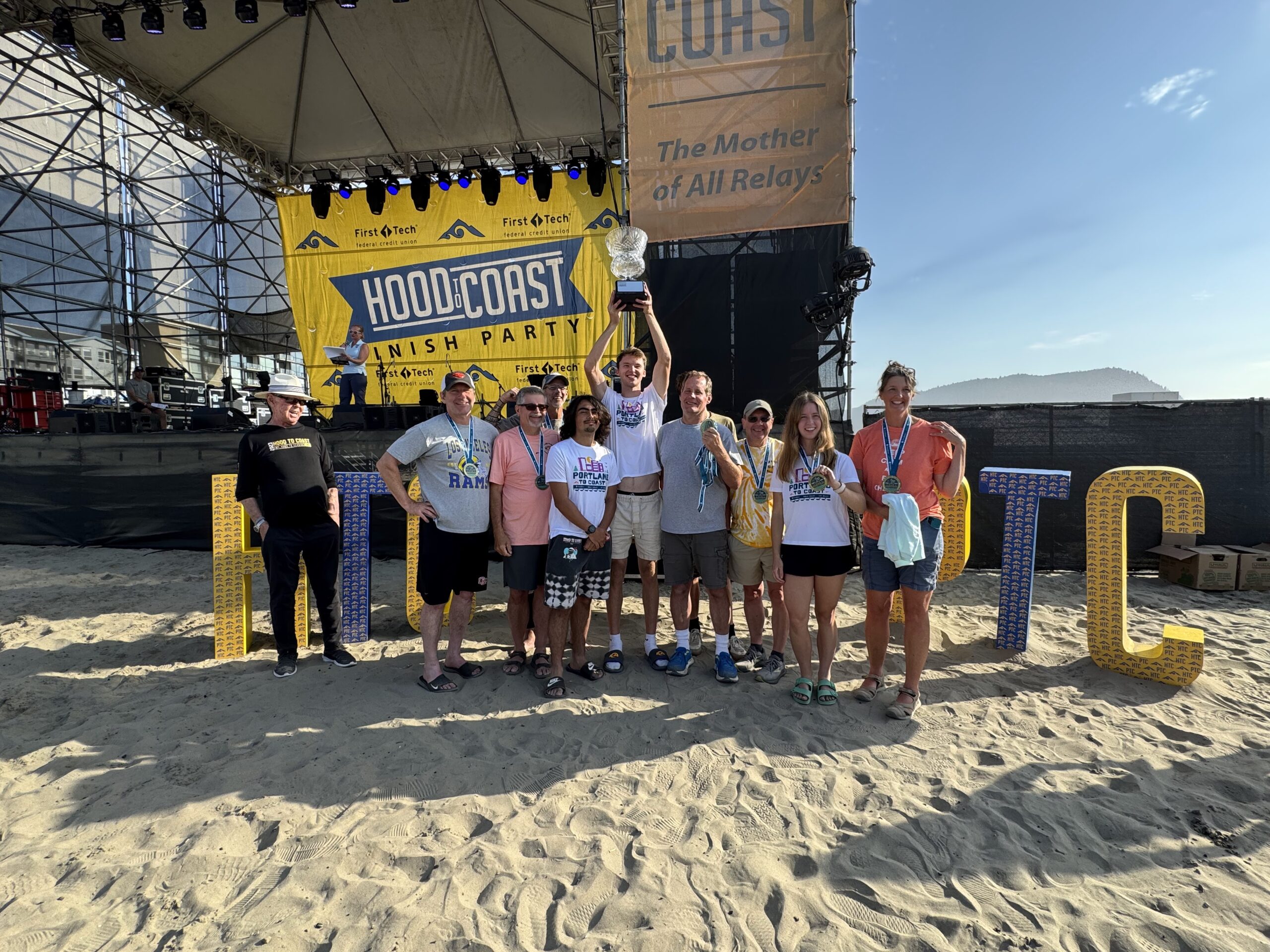
    My team has finished in the top two each of the past four years. We won in 2021 and 2022 and finished second in 23 and 24. Our goal this year was to beat our nemesis and finish under 24 hours. We didn’t count on daytime temperatures in the upper 90s, which lead to some slower times. We missed breaking 24 hours by less than 10 minutes and beat our rivals by over 33 minutes.

    Besides getting in some speed training, I had a chance to “field test” (pun intended) my sleeping gear for the Camino. Before the race, I think I had tested/used almost every piece of equipment I intend to take with me. But Friday night was my first time to test my eye mask and earplugs under conditions similar or worse to an alberge bunkhouse. I’m happy to report that the eye mask was perfect. I totally blocked out all light, while putting no pressure on my eyes. My earplugs were another story. We had about three hours to rest, but between the sound of generators, porta-potty doors slamming and the constant noise of road and foot traffic I got less than one hour. I am so glad I discovered the deficiency ieny of my ear plugs before leaving. I’ve ordered a pair of silicone earplugs that are supposed to reduce noise by 45 decibels. These were substantially more expensive than the six pair for a buck foam plugs, but being able to sleep through the sound of snoring neighbors will make them worth the money.
  • My Fanny Pack

    My Fanny Pack

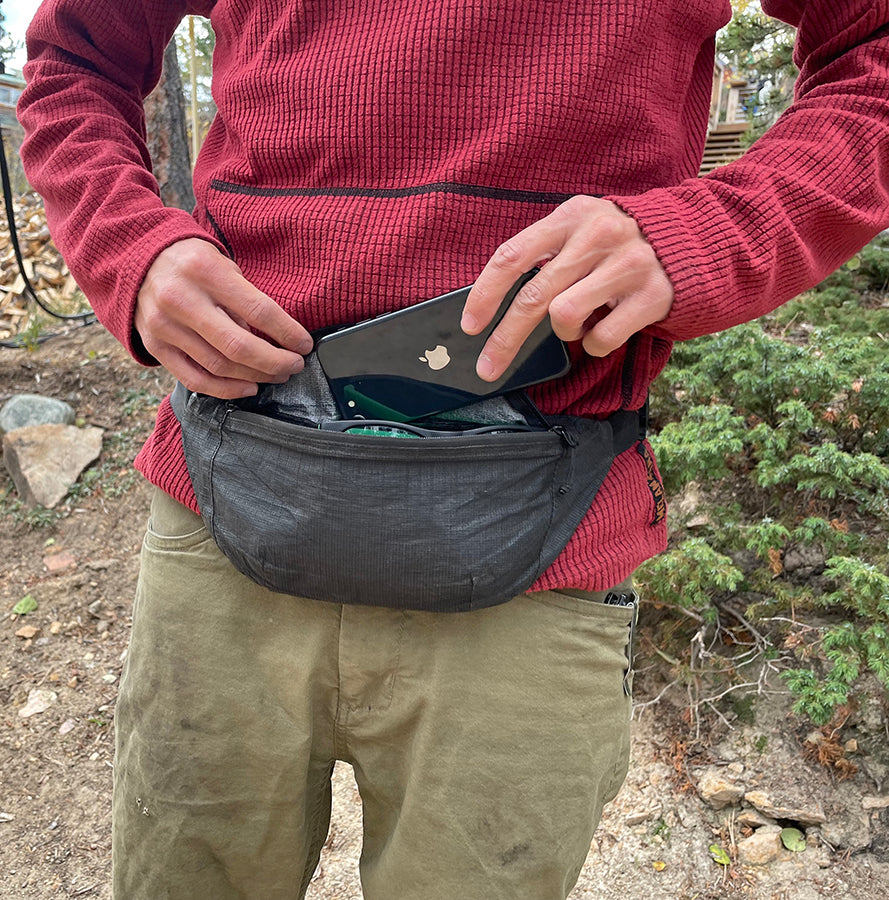
    While my backpack will tote the bulk of my belongings, my little fanny pack will be responsible for carrying the most important items. The fanny pack will never leave my side. If I’m not wearing it — for example while showering — it will be in the shower stall with me keeping my towel company.

    The reason for this obsession is that it will be carrying the irreplaceable items I will have on my trip, as well as some things I’ll just want ready access to while hiking.  I suppose I should clarify that the term “fanny” pack is a bit of a misnomer.  I’ll be wearing this with the pouch in front for both easy access by me and less easy access for anyone who would attempt to have me part ways with my valuables.

    So what will be in this marvelous non-fanny pack?

    Passport and Camino Credential – both in a silicone waterproof pouch.  One proves I’m an American citizen.  The other proves I’m a Camino pilgrim and entitled to stay at alberges and also receive discounts on admission to various attractions along the route.

    iPhone – my phone/camera/wallet/guidebook/blog posting tool. 

    Battery bank – for charging my phone, watch and occasionally my headlamp.

    Money clip – I won’t be carrying a traditional wallet.  Just a lightweight clip to contain my cash, a credit card and my Resolut ATM card.

    Chapstick, hand sanitizer and sunscreen – to protect me from both germs and UV rays.

  • Clothing care

    Clothing care

    While there may be the occasional accommodation that includes washer and dryer, most of the time, laundry will be a daily hand-wash process.  The daily ritual will be as follows:

    • Arrival at alberge and check in
    • Take a shower
    • Change into tomorrow’s hiking clothes
    • Hand wash today’s hiking clothes
    • Hang to dry
    • Hope things are dry by morning

    To facilitate this process, I am bringing three laundry-related items. 

    Earth Breeze Laundry Sheets – l LOVE these sheets and have been using them at home for the past several years.  I typically use a half sheet for a normal sized load at home, but for washing a handful of items, I’ll likely tear the sheet into about 12 pieces and that one little piece should do the trick.  For my hiking purposes, these sheets are great because they are super lightweight.  Three sheets weighing in at 10 total grams.  On a more general note, I really appreciate how I’m not paying for a bunch of water and that they come in biodegradable paper envelopes.  As a bonus, they are a local Oregon company, so I like supporting my state’s economy.

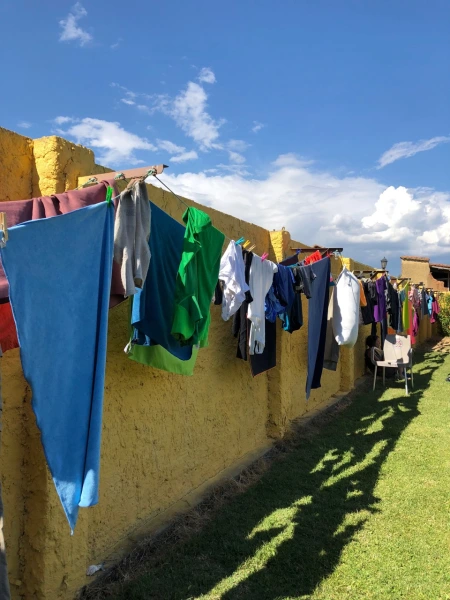
    Travel clothes pins – These are an item I’ve had for a long time and I can’t identify where I purchased them from.  They are very lightweight, but will keep my clothes on a drying line if a breeze comes up.

    Diaper Pins – there will be times when things are not completely dry by morning.  These pins will allow me to secure still-damp items to the outside of my pack so they can continue to dry as I walk. 

    Towel – while not officially part of my laundry kit, I do intend to use my microfiber towel to help squeeze out as much moisture as possible from the washed clothes before setting them out to dry.  By placing items flat on the towel and then rolling up and wringing out, I should be able to remove more moisture (with less concern for stretching out clothes) then I would if I wrung them up by themselves.

  • 20-miler

    20-miler

    Wednesday morning, I took my dog out to pee at 5 AM. It was pouring rain. I had a 20-mile hike to and from my parents house scheduled and the thought of canceling crossed my mind. Then, I remembered that it rains in Spain in Portugal too. In fact, by the time I reach Galicia, the state where Santiago is located, there’s a 50% probability on every day that there will be measurable rain. So on with the hike.

    By the time I started walking at 7 AM, it was just the typical Oregon pissing kind of rain that really never gets you wet. It’s just more of an inconvenience. 

    As the crow flies, my parents house is only about 5 1/2 miles from mine. But with a US highway, an interstate freeway and the Willamette river standing between us, you have to make some detours in order to get there.   I spent some time the day before mapping out a route on AllTrails. The route initially looked pretty good but on closer inspection, I realized I’d have to do some on-the-fly adjustments to avoid some tricky intersections and scary streets.

    While most of my training hikes have been on forested trails or in quiet residential areas, this one perhaps best replicated the types of conditions I expect to encounter in the Camino: getting from point A to point B can sometimes mean walking alongside busy roads.  

    Walking streets in Portland, Oregon is normally a pretty safe endeavor.  The city is generally pedestrian friendly, many streets have sidewalks and motorists generally try to scoot over to give you a little extra space.   

    But not all streets are created equal and there are a few that a downright frightening to walk  with non-existent shoulders around blind curves.  

    I use AllTrails as my mapping App.  It shows all the roads, the cut-through pedestrian paths, intersections with walk signals and contour lines so you have an idea about how steep the grade will be.  

    It also shows streams and helps explain why it’s impossible to get to an adjoining neighborhood without traversing at least short distances on scary roads.  

    During my 20-miler, I experienced both some of Portland’s best and worst pedestrian experiences.  The photos included here illustrate the variety of conditions. 

    The drizzle I experienced as I set off at 7 am quickly disappeared.  Aside from the occasional drop falling from a tree I made it to and from my parents place precipitation free.  I made great time and added a quarter-mile detour in Sellwood to stop at Blue Kangaroo for coffee and a pastry.  Even with the detour, I arrived at my folk’s apartment around 10:40.  

    Stopping in at Blue Kangaroo for a cold brew and berry muffin.

    I carried my full backpack and did a little show and tell of what and how I had packed.  We then had a nice lunch before I reversed course just after noon.  

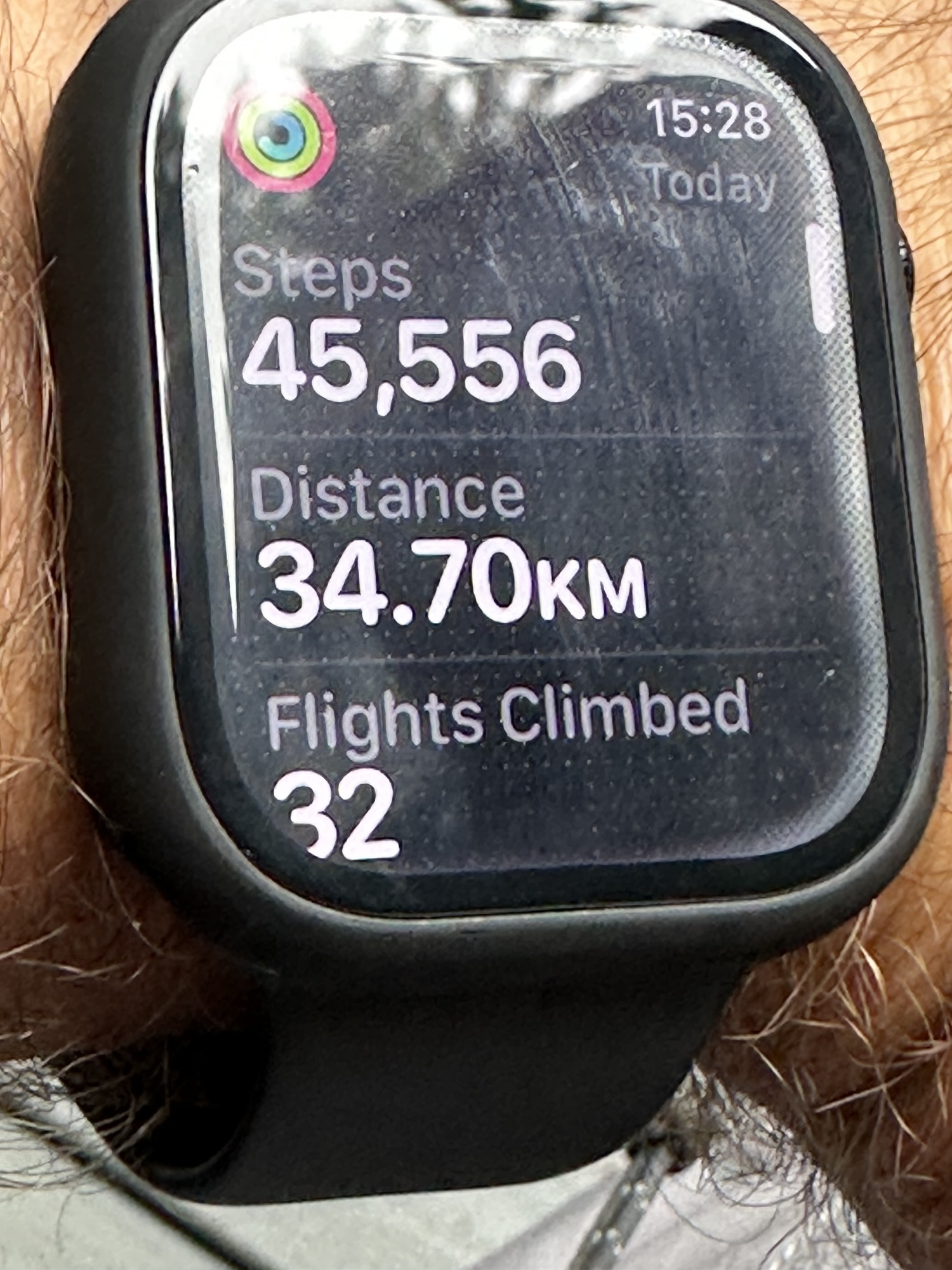
    In my way home, I didn’t follow my own policy of stopping every two hours to rest my feet.   While I made it home by 3:20, I paid the price for not taking a break midway to give my feet a breather.  After a good soaking in Epsom salts, they were as good as new.