Saturday, May 16 – After yesterday’s visit to a Neolithic burial site, we decided to jump ahead roughly 3000 years and visit some Roman ruins today. Our stay tonight is on the outskirts of Cirencester, which was originally called Corinium – which was the second largest Roman city in Britannia after Londoninium.
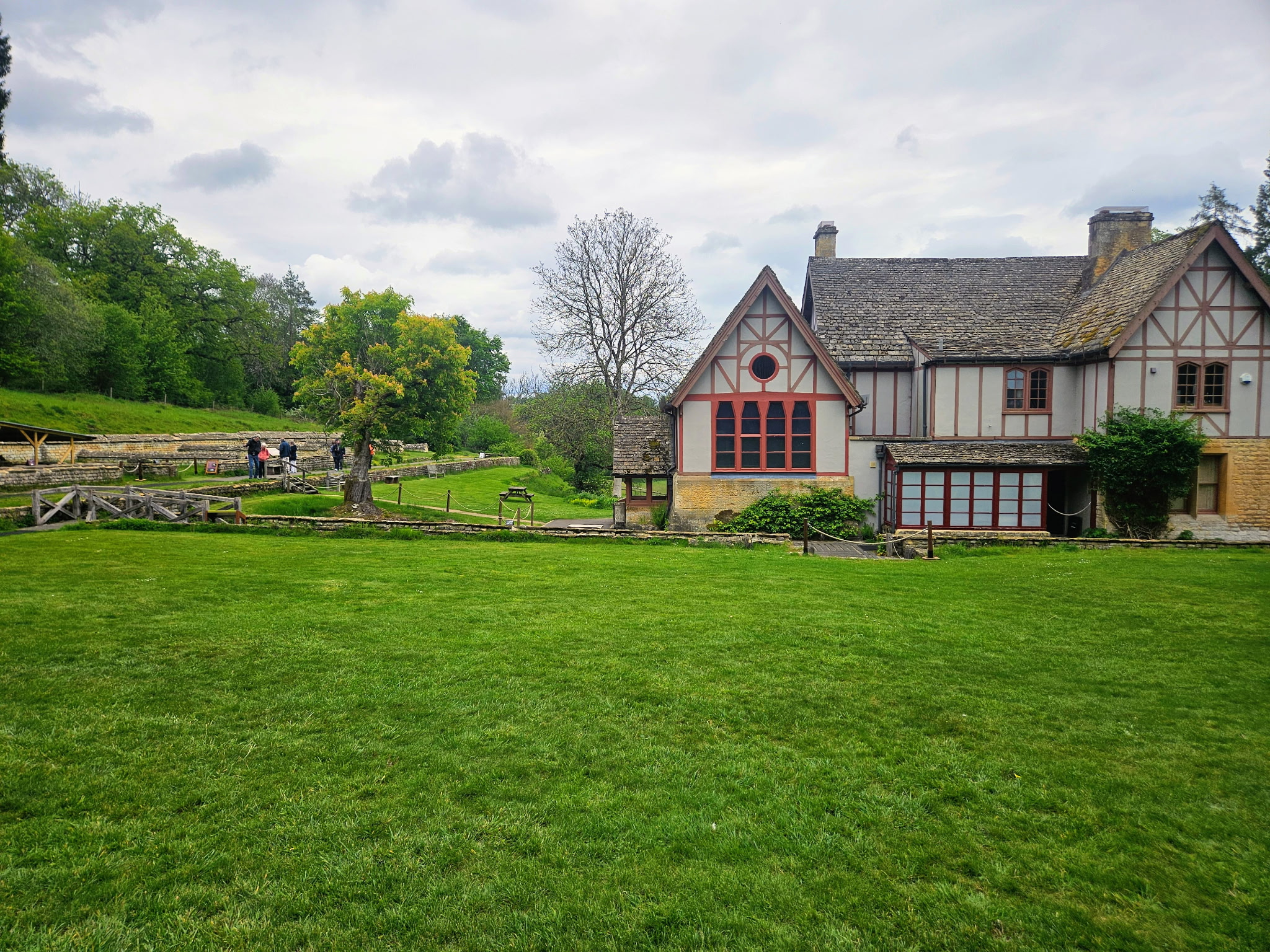
On our way there, we stopped by the Chedworth Roman Villa, where in the 1860’s the ruins of a Roman country estate were uncovered. The site was really well preserved with amazing mossiac tile floors the foundations of buildings covering roughly an acre. I’ll use the photo captions to describe some of the facilities.


After visiting the ruins, we drove into old town Cirencester. Pam wanted to do some shopping and I wanted to check out an open air market taking place near the cathedral. We agreed on a rendezvous time and place and went our separate ways to explore.
We regrouped, we had a late lunch/early dinner at the Black Horse Pub and ventured down the road to our night’s lodging. After having spent the last four nights in hotels or pubs all at least 200 years old, the DeVere Costwold Water Park is a bit of a shock. With 388 rooms, it is massive. It’s also the first place we’ve stayed with elevators and card keys.
The Cotswold Lakes are the result of a century of gravel mining on the Upper Thames. Beneath the gravel layer is an impervious layer of Oxford clay which results in the gravel pits quickly filling with water. Mining continues, but the area is vast (42 square miles) and over 180 lakes have been formed. Some are reserved for recreation while others are nature preserves. Our hotel sits on the shore of Lake 12. We took a walk around it and discovered the Thames-Severn Plough Road, which is an 18th century channel used to barge materials between these two major waterways of England.


